This article by Lydia Buttigieg – who is a full-time music teacher at the MAVC, Malta School of Music – is based on a presentation by the author at an event held on December 3, 2025, to celebrate the 50th anniversary since the school’s inception.
This article was published on the Times of Malta February 7, 2026.
The Johann Strauss School of Music recently celebrated its 50th anniversary, tracing its journey from its foundation in the 1970s, through its development in the late 20th century, to its transformation into the Malta School of Music in the 21st century. This history reflects not only the evolution of an institution but also the broader trajectory of music education in Malta.
Malta’s musical landscape before 1975
By the latter half of the 20th century, Malta faced a critical gap in formal music education. Despite a vibrant musical tradition, no conservatory or equivalent institution was providing structured training in theory, solfège, aural skills and performance. Music remained largely absent from school curricula, depriving students of systematic opportunities for artistic development.
Within this context, figures such as Mro Charles Camilleri and Michael Kissaun were advocating for the creation of a national music school, offering free tuition to talented students and serving as the foundation for a future national orchestra. The historical roots of the absence of institutionalised music education in Malta may be traced back as far as 1923, when, as reported in a Times of Malta article, the Royal Opera House proposed that the impresario “shall open a Choral and Musical Institute for Maltese males and females over 14 years of age”.
Despite this early initiative, progress in establishing a formal educational infrastructure for music remained limited for several decades. By the early 1970s, the absence of institutional provision had become a matter of national concern and a catalyst for change.
Austrian collaboration and the school’s foundation
The establishment of the Johann Strauss School of Music was realised through bilateral cooperation between Malta and Austria in the early 1970s. A decisive moment occurred with Austrian Chancellor Bruno Kreisky’s visit to Malta in May 1973, which strengthened cultural ties and led to Austria’s commitment to assist in founding a school of music.
In April 1974, a delegation from the University of Music and Dramatic Art in Salzburg visited Malta to identify areas for collaboration. Their discussions with minister Agatha Barbara laid the groundwork for the school, later named after Johann Strauss, to symbolise the cultural alliance between the two countries.
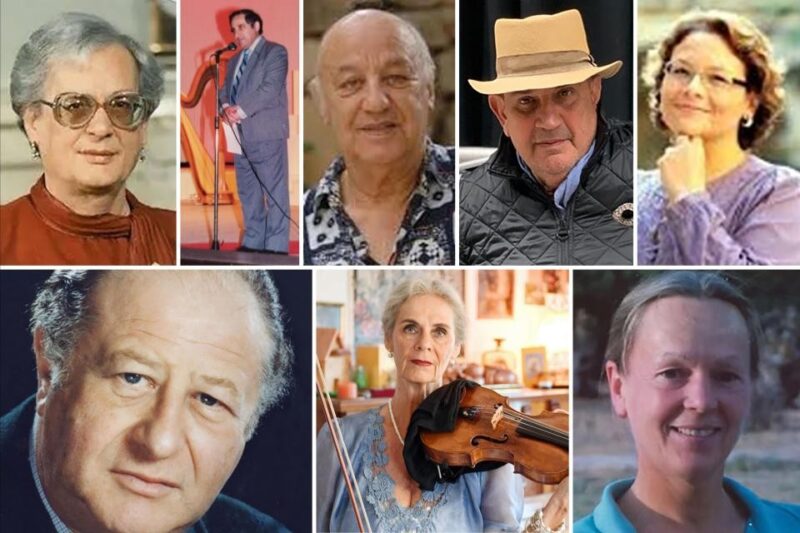
In October 1974, three Austrian educators, Verena and Alexander Maschat and Sventha Danneberg, arrived in Malta to establish the school’s pedagogical foundation. Verena Maschat, a trained Orff specialist, introduced the Orff-Schulwerk approach, which emphasised learning music through play, movement and improvisation. This child-centred pedagogy fostered creativity, rhythmic awareness and ensemble sensitivity, an entirely new approach for Malta at the time.
Alexander Maschat developed wind and orchestral programmes while Sventha Danneberg founded the string department and later provided masterclasses in Malta. Together with Mro Joseph Vella, these pioneers created a pedagogically rich environment that balanced artistic excellence with community engagement.
Early development and cultural integration
The school officially opened in 1974 at 74, Old Bakery Street, Valletta, strategically located near the Manoel Theatre, reflecting its integration into Malta’s cultural centre. Early Maltese tutors included Josephine Grima, Charles Monreal and Joseph Agius, later joined by Mario Bisazza, Antoine Frendo, Monica Miggiani and others.
The first chamber concert, held on April 1, 1975, at the Manoel Theatre, showcased baroque and contemporary Maltese repertoire, including Joseph Vella’s Cyclic Improvisations and
Fughetta.
The official inauguration took place on April 10, 1975, and was attended by Maltese and Austrian dignitaries. Austria contributed instruments, pedagogical materials and teaching staff. At the same time, scholarships enabled Maltese students to study Orff-Schulwerk in Salzburg and others pursued advanced studies at the Mozarteum Academy.
Despite contemporary concerns about sustainability and professional opportunities for musicians, the school quickly became a hub of cultural life, fostering both public engagement and formal music education.
Expansion and pedagogical growth (1980s-2000)
The late 1980s and 1990s marked a decisive phase under Mro Vella, who was appointed the school principal in 1987. Vella was renowned for his ability to identify and nurture talent, offering young musicians’ formative opportunities to perform and grow. Under his leadership, the Johann Strauss Orchestra gained national prominence, performing both international repertoire and works by Maltese composers.
Austrian collaboration continued during this period. Instruments, library materials and workshops led by Salzburg luthier Fritz Reuterer helped instil a culture of instrumental craftsmanship. The school also expanded physically, ultimately transforming its internal courtyard into a three-level performance venue in 2004, later hosting Malta’s first orchestral Klezmer concert.
Pedagogically, the school broadened from a handful of full-time students to a thriving centre, ensembles such as the school band, and the orchestrina, directed by Mro Anthony Chircop, introduced students to ensemble discipline, rhythmic precision and collaboration.
A significant milestone was the creation of a Junior Orchestra in 1985, followed by an Intermediate Orchestra. Students eventually performed alongside their teachers, forming a vertically integrated mentorship system, a model inspired by European conservatoires that fostered community, artistic excellence and continuity.
The 1990s also saw increased operatic activity and short-term international courses, strengthening Malta’s links to European music education and cultivating a cosmopolitan learning environment that balanced local identity with international perspectives.
By 2000, the Johann Strauss School of Music had emerged as a national centre of musical excellence, producing generations of musicians and educators who shaped Malta’s musical culture.
Restructuring and renewal in the 21st century
By 2010, the school faced challenges of modernisation, accessibility and structural reform. A decentralisation initiative was launched, establishing multiple centres, including St Elmo’s School, Valletta, to broaden access to music education.
Although this project was discontinued after five years, it sparked critical reflection and set the stage for a more comprehensive transformation.
In January 2015, the school relocated to new premises in Ħamrun. Under Mary Ann Cauchi, the institution underwent curricular expansion, introducing contemporary voice, composition and musicology, and established a policy framework outlining the roles of students, teachers and parents.
Crucially, Cauchi oversaw the national accreditation of all the school’s courses, in collaboration with specialists such as the present author and Natascha Chircop, culminating in formal recognition by the National Commission for Further and Higher Education (NCFHE). A board of studies was also established to maintain curriculum quality and pedagogical innovation.
Between 2016 and 2017, staff took part in an Erasmusplus staff and mobility project, visiting the Emil Dārziņš Music School and the Latvian Academy of Music, both in Riga. These exchanges enriched professional practice and inspired contemporary teaching approaches in Malta.
The Music Theory Department was also strengthened. Building on the legacy of pioneers such as Mro Peter Paul Ciantar and Anthony Farrugia, the curriculum was revised to meet contemporary standards. Frederick Aquilina joined as a solfeggio specialist, and a series of graded workbooks, coordinated by the present author, provided a comprehensive, structured pedagogical resource still in use today.
Integration into Mikiel Anton Vassalli College
In 2018, the school, renamed the Malta School of Music, was formally incorporated into Mikiel Anton Vassalli College. This integration introduced Level 5 diplomas in performance, composition and musicology, providing structured pathways for professional study.
Instrumental tuition now covers a wide range of disciplines, including violin, harp, accordion, bagpipe and jazz guitar. Weekly instruction in both instrumental performance and music knowledge is complemented by ensemble participation in orchestras, choirs, chamber groups and jazz combos. These ensembles are central to Malta’s concert life, contributing to a vibrant culture of performance and public engagement.
Conclusion
The trajectory of the Johann Strauss School of Music, culminating in the Malta School of Music, represents far more than institutional continuity. It embodies the transformation of Malta’s cultural and educational landscape. From its foundation in 1975 through Austrian collaboration, through the development of orchestral programmes, ensemble training and pedagogical innovation, to its restructuring and accreditation in the 21st century, the school has consistently combined artistic excellence with accessibility and inclusivity. Its integration within the Mikiel Anton Vassalli College consolidated its academic standing and reinforced its role as a national hub for musical learning.
Today, the Malta School of Music continues to honour its pedagogical heritage while embracing innovation, preparing generations of Maltese musicians, educators and cultural leaders for the challenges and opportunities of the 21st century

The Mikiel Anton Vassalli College is the national network of specialised schools for Visual and Performing Arts Education in Malta and Gozo.
Malta Office of the College Principal
32, Joseph Abela Scholaro Street,
Hamrun HMR 1304, Malta
Gozo Office of the College Principal,
Mikiel Anton Vassalli College, Industrial Zone,
Jean De La Valette Street,
Xewkija, XWK 3000, Gozo
+356 2598 3710
mavassalli.college@ilearn.edu.mt